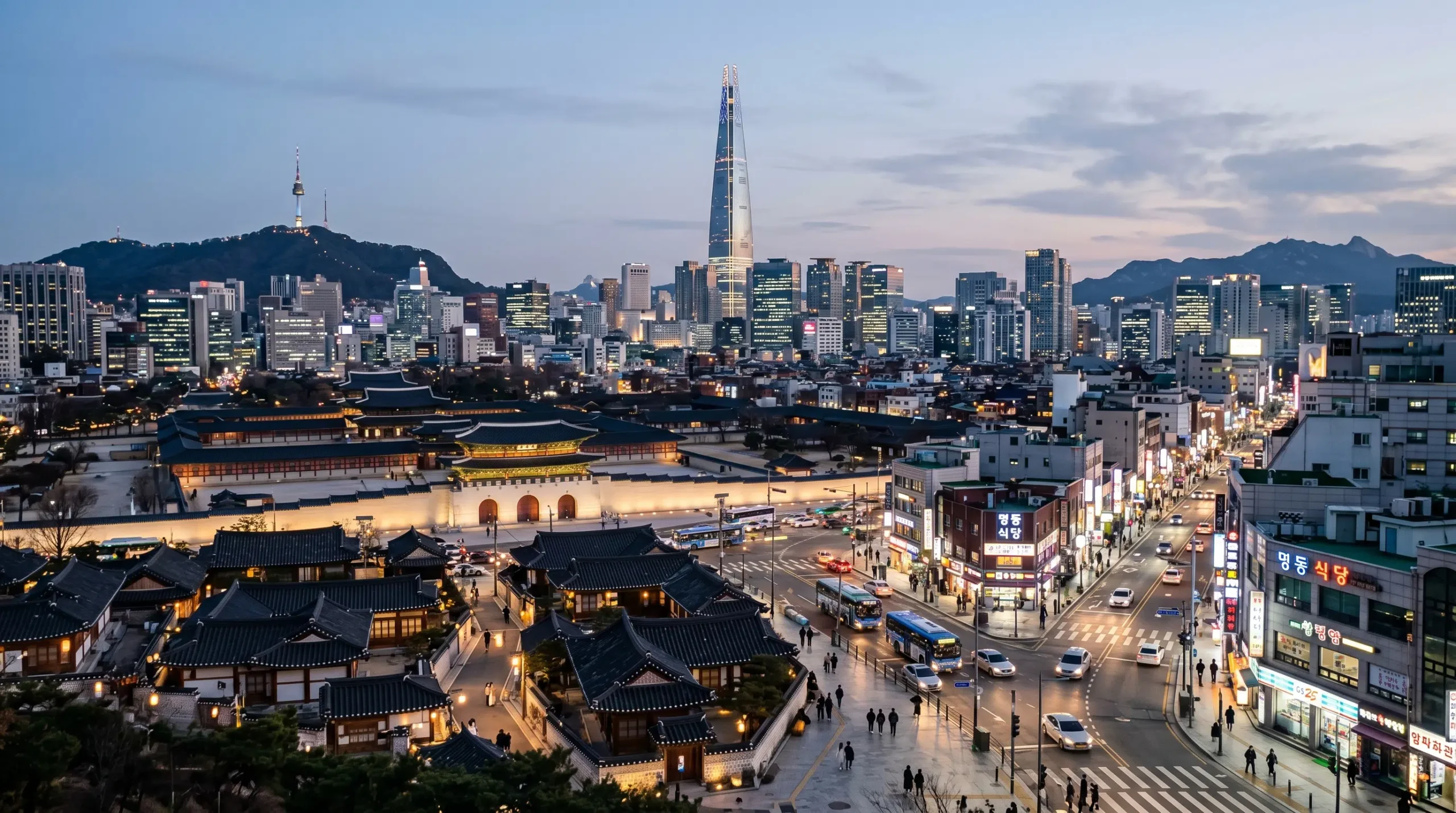
For someone new to South Korea, the most striking feature is the incredible level of public security. It is a society built on a high degree of mutual trust.
The “Unattended Belongings” Phenomenon: You will often see people leave high-end smartphones or laptops on cafe tables to “reserve” a seat while they go to order. Theft is remarkably rare, making it a stress-free environment for travellers.
24-Hour Vitality: Because the crime rate is so low, cities never truly sleep. It is perfectly common to see people of all ages walking home alone late at night without any sense of unease.
South Korea is a global pioneer in digital integration. Life here moves at a different speed thanks to world-leading infrastructure.
Hyper-Efficiency: The national mantra is Ppalli-Ppalli (Hurry-Hurry). This manifests in instant internet speeds, rapid-fire food delivery, and administrative services that take minutes rather than days.
The Transit Network: The subway systems in cities like Seoul and Busan are often ranked the best in the world. They feature climate-controlled seats, transparent digital maps, and glass safety doors – all for a very low cost.
To understand Korea, you must understand its comeback story. It is a nation that transformed from a war-torn agrarian society to a global tech giant in just a few decades.
The Industrial Giants: Korea is the birthplace of brands that define modern life, such as Samsung, LG, and Hyundai.
The Power of Education: This “miracle” was fuelled by a national obsession with learning and self-improvement, creating a highly skilled and resilient population.
South Korea is currently the world’s most exciting cultural exporter. Its music, film, and fashion have captured global attention.
Modern Icons: From the synchronized performances of K-Pop stars to the high-production value of K-Dramas, the country’s entertainment industry is a masterclass in creativity.
Skincare Authority: “K-Beauty” has revolutionized the world’s cosmetic industry, focusing on innovative ingredients and a holistic approach to healthy skin.
While the cities are futuristic, the natural landscape is ancient and rugged. Most of the country is covered by beautiful mountain ranges.
A Nation of Hikers: Hiking is more than a hobby; it is a way of life. Trails are excellently maintained, often leading to hidden Buddhist temples or stunning panoramic views of the sea.
Jeju’s Natural Wonders: The island of Jeju is a UNESCO World Heritage site, famous for its volcanic “lava tubes,” emerald waters, and unique island culture that feels distinct from the mainland.
Eating in Korea is a communal event designed to bring people together.
The Table Spread: A unique feature is Banchan—a variety of small, colorful side dishes (like spicy fermented cabbage called Kimchi) that are served for free with your meal and are usually unlimited.
Interactive Dining: Many meals, like Korean BBQ, involve cooking your own meat on a grill built into the center of the table, making the dining experience active and social.
Despite its modern exterior, South Korea is guided by centuries-old Confucian values that emphasize harmony and respect for others.
Social Etiquette: The language itself has different levels of politeness to show respect to elders or strangers. This creates a society that is generally very polite and orderly.
Hospitality: Visitors are often treated with great warmth. It is common for locals to go out of their way to help a newcomer navigate a subway station or find a hidden restaurant.
Summary: South Korea is a rare destination where you can stand in a quiet, 14th-century palace garden and hear the hum of a high-speed train in the distance. It is a country that honours its past while sprinting toward the future, offering a level of convenience and safety that is hard to find anywhere else.
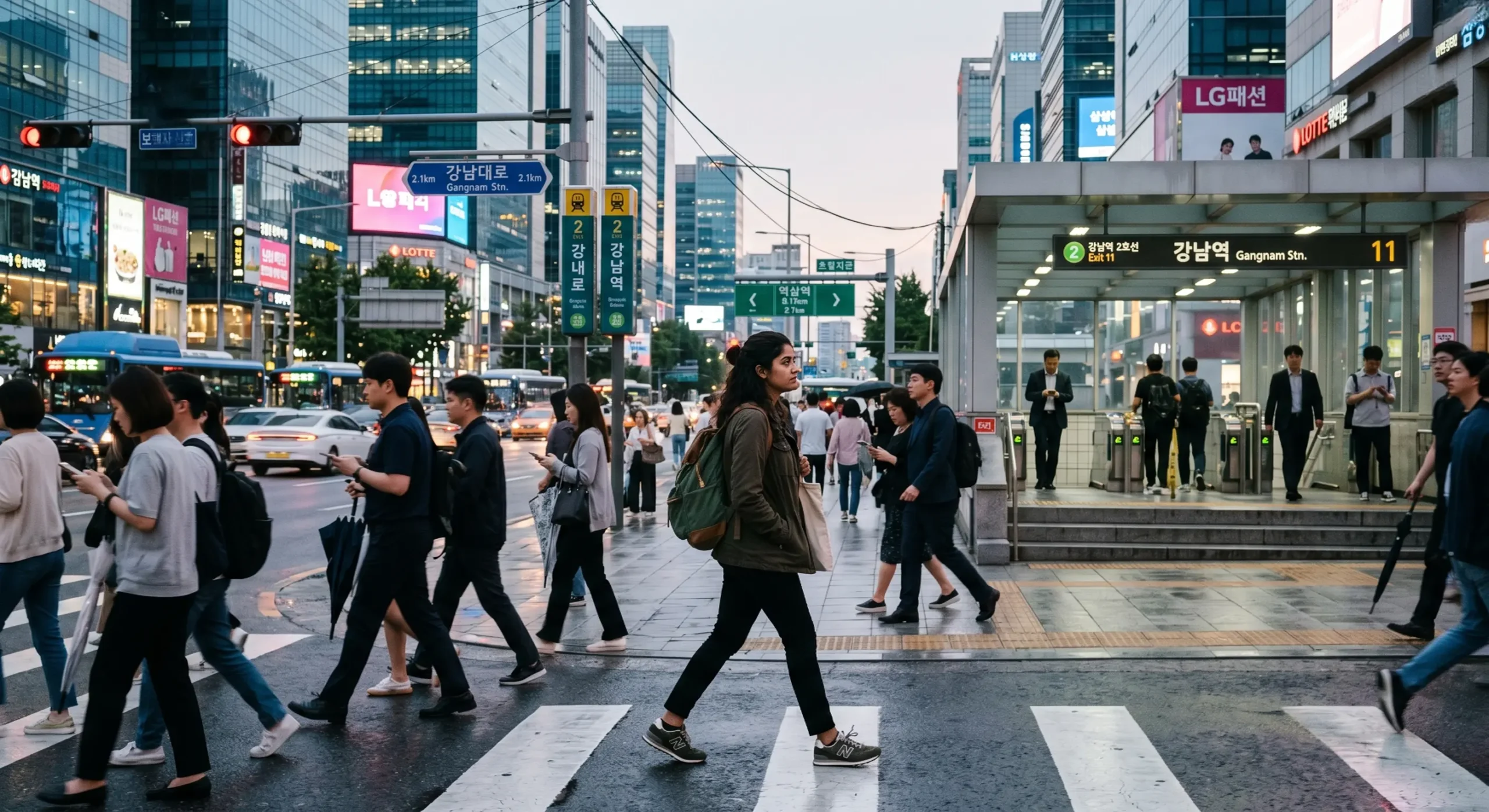
South Korea is a high-tech society that deeply respects its dynastic roots. It is one of the few places where a 600-year-old palace sits directly across from a glass skyscraper.
Seasonal Strategy: Target Mid-April for the cherry blossom peak or Late October for the crisp, orange-hued autumn foliage.
The Mobility Kit: * Apps: Download KakaoBus and Naver Map. Western GPS apps often struggle with pedestrian routing in Korea due to local security regulations.
Connectivity: Rent a “Pocket Wi-Fi” (Egg) or get an e-SIM at Incheon Airport; Korea boasts some of the world’s fastest mobile speeds.
Destination Highlights:
Seoul: Focus on the “Big Five” palaces and the hiking trails of Bukhansan.
Jeonju: The spiritual home of Bibimbap and traditional Hanok villages.
DMZ: A sobering, essential day trip to the border with North Korea.
South Korea’s education system is rigorous, but it offers world-class facilities and a vibrant campus culture.
The SKY Goal: The top-tier institutions are Seoul National, Korea University, and Yonsei. Admission is prestigious and competitive.
Cost of Living: While tuition is low compared to the US/UK, “hidden” costs like housing deposits can be high.
Lifestyle: Student life often centres around “University Towns” (like Sinchon or Anam), where affordable food and 24-hour study cafes are the norm.
Language Barrier: While many graduate programs are in English, daily life requires TOPIK (Test of Proficiency in Korean) level 3 or higher for true integration.
The Korean workplace is shifting from a seniority-based “top-down” model to a more merit-based, startup-friendly environment.
Visa Pathways: The E-7 (Foreign National of Ability) is the standard for skilled professionals, while the E-2 is for language instructors.
Business Culture – Nunchi: This is the “art of sensing” the room. Observing social cues and hierarchy is often more important than what is explicitly said.
Dinner Diplomacy: Business often extends into dinner. While heavy drinking is declining among younger generations, participating in team meals is still a key way to build trust.
The 52-Hour Cap: Recent labour reforms strictly limit the work week to 52 hours to combat the “overwork” culture.
South Korea is a “test market” for global trends. If a product succeeds in the hyper-competitive Seoul market, it is often ready for global scale.
The Chaebol Factor: Large conglomerates (Samsung, Hyundai, LG) dominate the economy, but the government is aggressively subsidizing a “K-Startup” ecosystem for foreign entrepreneurs.
Logistics: Korea’s infrastructure is world-class. The KTX (High-Speed Rail) connects the entire country in under 3 hours, making decentralized business very feasible.
Intellectual Property: Korea has robust IP laws, but it is essential to register trademarks locally through a Korean attorney early in the process.
For those looking to make Korea a permanent home, the transition usually involves a “Point System.”
F-2-7 (Resident Visa): This is often the stepping stone to PR. Points are awarded for age, income, education, and Korean fluency.
F-5 (Permanent Resident): This visa allows you to stay indefinitely regardless of employment status. The most common requirement is maintaining a specific income level (usually 2x the GNI per capita) for a set period.
Social Integration (KIIP): The government offers a free Korea Immigration and Integration Program. Completing this significantly boosts your points for PR and waives certain exam requirements.

As an Indian student, you cannot move directly from graduation to PR. You must follow a “Visa Bridge.”
Step A: Switch to a D-10 (Job Seeker) visa after graduation to find a sponsor.
Step B: Secure an E-7 (Professional) visa or an F-2-7 (Points-Based Resident) visa. The F-2-7 is highly recommended because it allows for more job flexibility.
Step C: Apply for the F-5-10 (Advanced Degree) PR track if you hold a Master’s in a STEM field from a Korean university. This track has lower income requirements than others.
If you are working in a specialized field (IT, Engineering, etc.), the path is based on longevity and financial stability.
Timeline: You generally need to have lived in Korea for 5 consecutive years.
Financial Bar: For the standard F-5-1 visa, your annual income must typically be double the Gross National Income (GNI) of Korea (approx. ₩104.8 million).
Social Integration: You must pass the KIIP Level 5. This government program is the most critical hurdle for workers.
For Indian entrepreneurs or those with significant capital, the process focuses on economic contribution.
Capital Requirement: A standard investment of ₩500 million into a Korean corporation is the baseline for the D-8 visa.
Fast-Track PR: If you invest approximately $500,000 USD and create at least 5 full-time jobs for Korean citizens, the 5-year residency requirement can often be shortened.
Tech Start-ups (D-8-4): Indian tech founders can use the OASIS program to earn points for their visa based on their patents and business plans.
Condensed Checklist for PR (F-5):
| Requirement | Detail |
|---|---|
| Income | Usually 1x to 2x the GNI per capita (approx. ₩52.4M to ₩104.8M). |
| Language | Completion of KIIP Stage 5 or a high score on the Permanent Residency test. |
| Integrity | A clean criminal record certificate from India (Apostilled) and no major violations in Korea. |
| Assets | Proof of financial self-sufficiency (savings, property, or steady employment). |
Key Advice for Indian Applicants:
Start KIIP Early: Do not wait until you are ready to apply for PR. The classes for the Korea Immigration and Integration Program fill up fast and take months to complete.
Degree Advantage: Having a Master’s or PhD from a Korean university significantly lowers the “years of residency” required for certain PR tracks.
Stay Documented: Keep your Indian passport valid and ensure all your professional contracts are filed correctly with the Ministry of Justice.
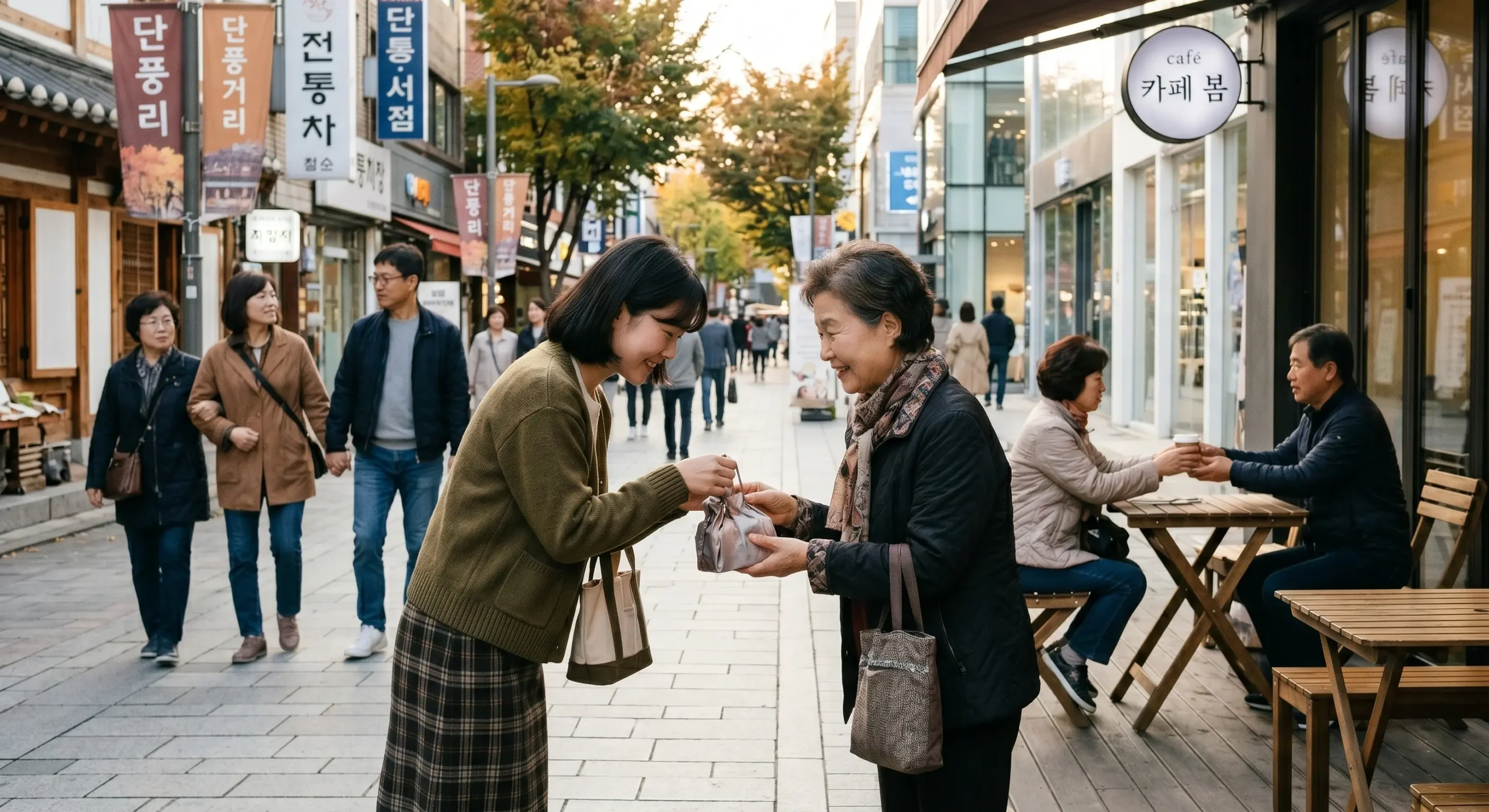
The bedrock of Korean interaction is an awareness of one’s place within a social group.
The Art of the Bow: This is the universal sign of respect. Use a deeper bow (bending from the waist) for elders or those in high-ranking positions. A simple nod is only for very close friends of the same age.
The Two-Handed Gesture: Whether you are handing over a credit card, receiving a gift, or pouring a drink, always use both hands. This signals that the person you are interacting with has your full attention and respect.
Nunchi (The “Eye-Measure”): This is the Korean superpower of “reading the room.” It involves sensing others’ moods and thoughts to maintain social harmony (Kibun).
Meals in Korea are communal and governed by specific rituals that emphasize the group over the individual.
The Elder’s Lead: At the start of a meal, wait for the oldest person to pick up their chopsticks before you begin. Similarly, do not leave the table until the elders have finished.
Chopstick Etiquette: Never plant your chopsticks vertically into your rice bowl, as this mimics a ritual for the deceased. Also, unlike some other Asian cultures, it is considered impolite to lift your rice bowl off the table while eating.
The Pouring Ritual: It is rare to pour your own drink in a social setting. If your glass is empty, someone will likely fill it; you should return the favour. If an elder pour for you, hold your cup with two hands and turn your head away to take the sip.
South Korea is densely populated, which has led to a culture of quiet and orderly public behaviour.
Voice Control: Loud talking on subways or buses is viewed as disruptive. If you must take a call, keep it brief and whisper.
The “Sacred” Seats: You will see empty seats at the end of subway cars even when the train is packed. These are strictly for the elderly, injured, or pregnant. Sitting in them as a young, healthy person is a major social faux pas.
Escalator Flow: The standard is to stand on the right side and leave the left side open for those who are in a hurry.
The Shoe Threshold: Upon entering a home, a temple, or even some traditional restaurants and guesthouses, you must remove your shoes. There is usually a sunken foyer (Hyeongan) specifically for this. Socks should be clean and without holes.
Business Cards (Myeong-ham): Treat a business card as you would treat the person. Receive it with two hands, study it respectfully for a few seconds, and place it on the table. Never put it in your back pocket or write on it.
No Tipping Culture: Tipping is not required or expected in South Korea. In fact, leaving extra money might result in a server chasing you down to return it, thinking you forgot your change.
Privacy and Photography: Korean laws regarding “Portrait Rights” are strict. Avoid taking photos where strangers’ faces are clearly visible without their consent, especially in intimate or residential settings.
Trash and Recycling: Waste management is a highly organized civic duty. You must sort trash into specific categories: food waste, recyclables (bottles, cans, paper), and general waste. Using the wrong bag can result in heavy fines.
The “Soft” No: Koreans often avoid direct “No” answers to save face. If someone says “It might be difficult” or “I will think about it,” they are likely politely declining.
Physical Touch: While friends of the same gender may be very physically affectionate (holding hands or leaning on each other), public displays of romantic affection remain relatively conservative, especially around older generations.
Summary Advice: If you are ever unsure, simply watch what the locals are doing and mimic them. Koreans are famously hospitable to international visitors and will appreciate your effort to respect their traditions, even if you don’t get every detail perfect.
Essential Cultural Etiquette:
| Action | Proper Protocol |
|---|---|
| Greetings | A 15-to-30 degree bow is standard. Higher status equals a deeper bow. |
| Giving/Receiving | Always use two hands when giving or receiving money, gifts, or business cards. |
| Public Transit | Leave the pink seats (pregnant women) and end-row seats (elderly) empty, even if the train is crowded. |
| Trash | Korea has a strict recycling/food waste system. Disposal requires specific bags purchased at local convenience stores. |
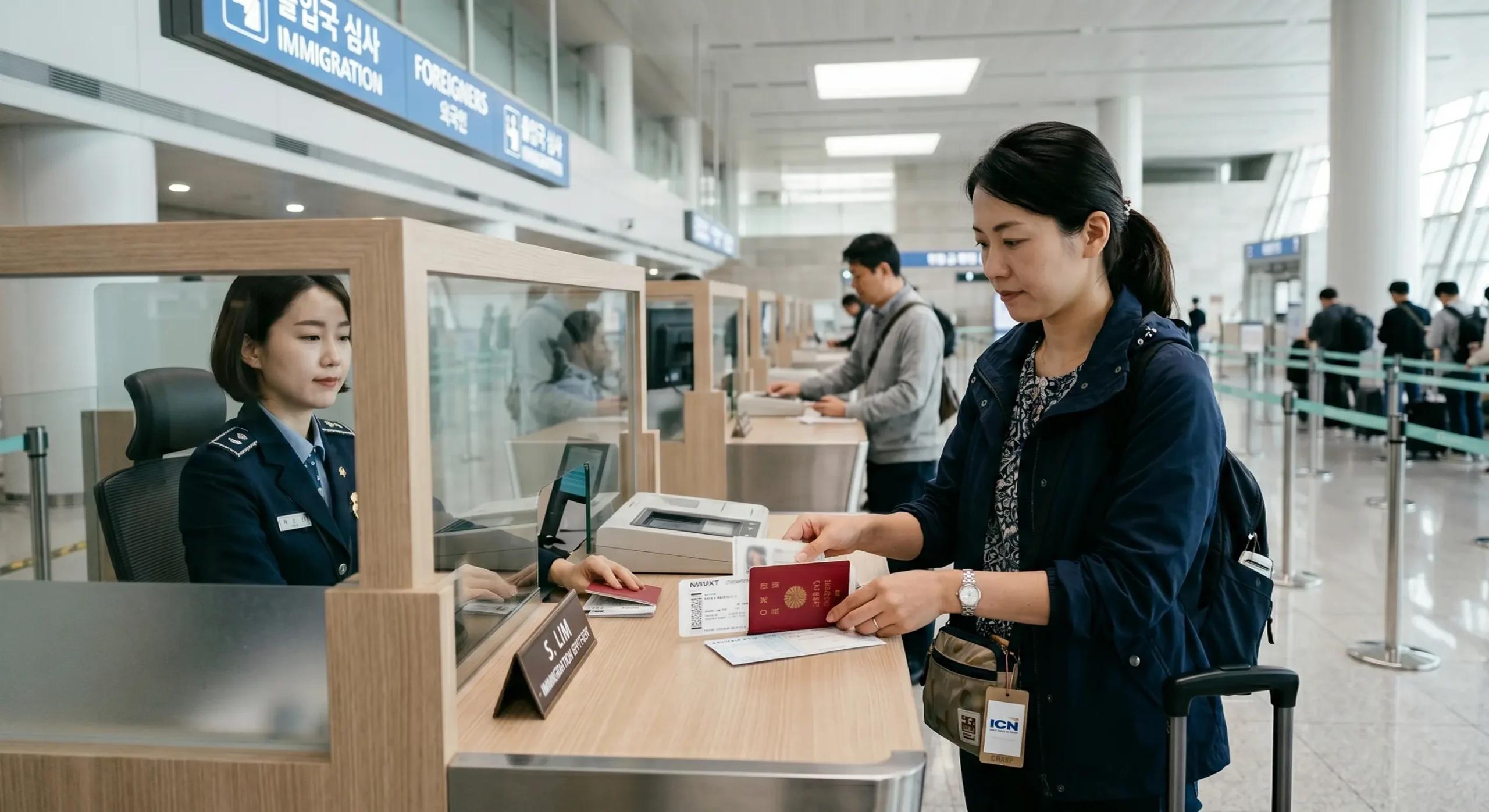
Designed for leisure travellers, this visa typically grants a stay of up to 90 days.
Financial Benchmarks: You must demonstrate fiscal stability through 6 months of bank statements. A consistent balance of $1,500–$2,000 USD is generally the “safe” threshold for short stays, while longer trips require more.
The K-ETA Update: As of 2026, the K-ETA is mandatory for visa-exempt nationalities (e.g., USA, UK) and must be secured at least 72 hours before boarding.
Processing: Applications are typically managed through centres like KVAC or BLS. Standard turnaround is 5–15 business days.
The D-2 is for degree programs (Bachelors/Masters), while the D-4 is for language training.
Core Requirement: You must possess an original Certificate of Admission (CoA) and the university’s business registration copy.
The “2026 Financial Bar”: Proof of funds has shifted. For Seoul-based universities, you generally need to show a bank balance of $20,000 USD; regional universities may allow $15,000–$18,000 USD.
Health Screening: Applicants from 35 designated countries (including India, Philippines, and Vietnam) must provide a recent Tuberculosis (TB) test result from an embassy-approved clinic.
This is the primary pathway for international specialists (IT, engineering, management).
The GNI Rule: Your salary must meet the 2026 threshold, which is generally 100% of the previous year’s GNI (approximately ₩43.5M–₩45M). For small businesses or start-ups, a lower threshold of 70% GNI may apply under specific conditions.
Sponsorship: The hiring company must maintain a ratio where at least 80% of their full-time staff are Korean citizens.
Academic Tie: You typically need a Master’s degree in the relevant field or a Bachelor’s degree combined with at least one year of documented work experience.
This category is for entrepreneurs and corporate investors.
Investment Minimum: You must invest a minimum of ₩100 million (approx. $75,000 USD) into a Korean entity and hold at least a 10% stake in the company.
The OASIS Point System (D-8-4): For tech start-ups, points are awarded for Korean language proficiency, educational background, and intellectual property (patents).
Proof of Capital: You must provide a “Foreign Currency Purchase Certificate” to prove the funds were legally remitted from abroad. Domestic cash is usually not eligible for initial D-8 status.
Visa Comparison Snapshot (2026) :
| Category | Primary Focus | Financial Proof | Key Documentation |
|---|---|---|---|
| Tourist | Leisure | $1.5k - $2k Balance | Flight/Hotel Itinerary |
| Student | Education | $15k - $20k Balance | Certificate of Admission |
| Work | Skill/Career | GNI-linked Salary | Employment Contract |
| Business | Investment | ₩100M+ Capital | Investment Notification |
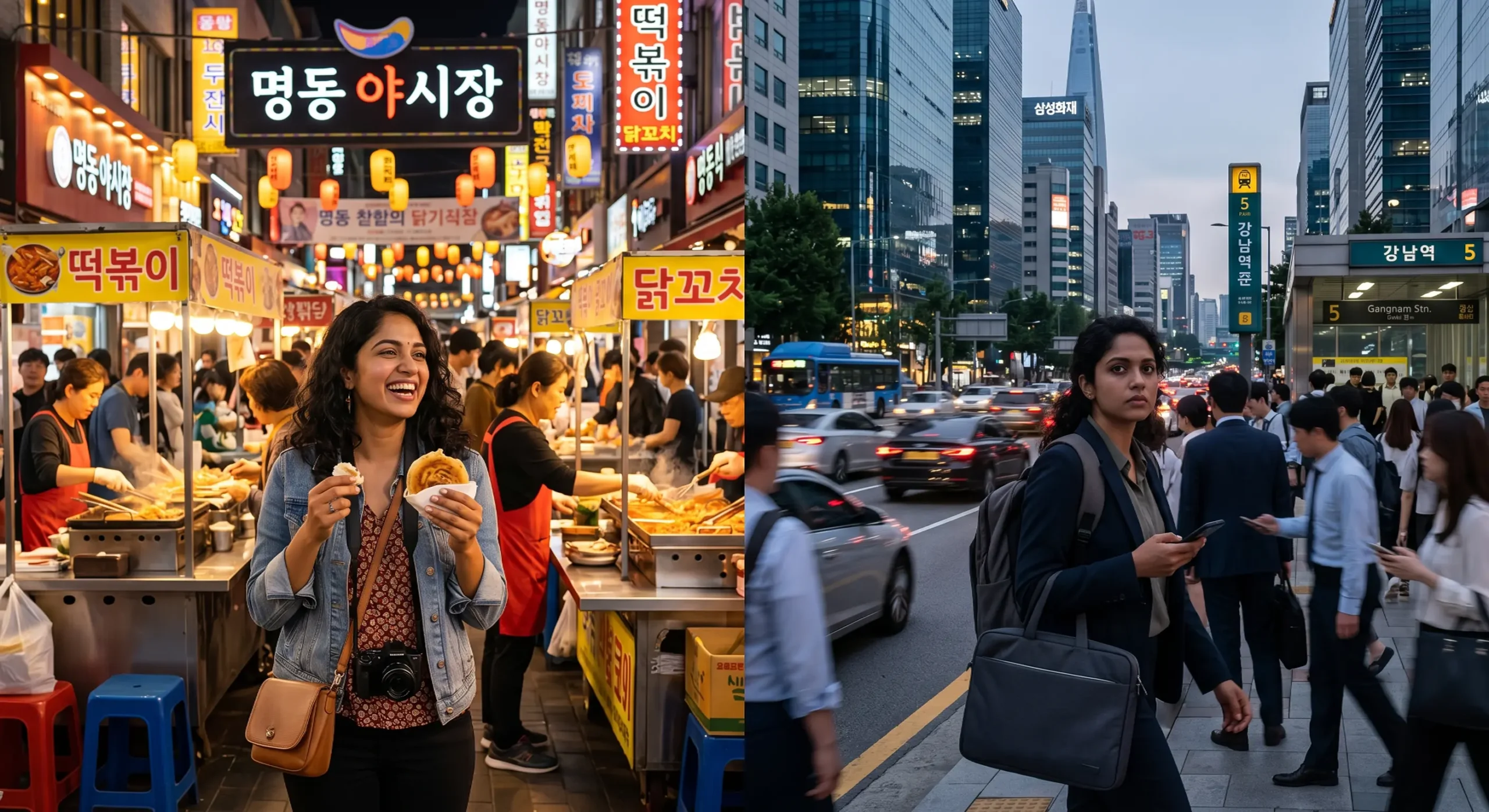
Whether you’re planning a brief getaway or a long-term relocation, South Korea in 2026 offers a high-speed, hyper-convenient lifestyle that is rewarding yet demanding.
Here is the 2026 breakdown of the advantages and challenges for both paths.
South Korea is one of the most “frictionless” travel destinations in the world, where infrastructure is designed for speed.
✅ The Pros
Supreme Personal Safety: Public security remains world-class. It is common to see people walk alone late at night or leave valuables unattended in cafes without issue.
Advanced Transit: The KTX (High-Speed Rail) and spotless city subways make cross-country travel affordable and incredibly efficient.
Cultural Hub: From the traditional palaces of Seoul to the volcanic beauty of Jeju Island, the contrast between ancient history and neon-lit modernity is striking.
Convenience Culture: 24-hour convenience stores and high-speed public Wi-Fi are available almost everywhere, making logistics easy for travellers.
❌ The Cons
Navigation Barriers: Western GPS apps like Google Maps are still limited for walking directions. You must adapt to local apps like Naver Map or KakaoMap.
Over-Tourism in Hubs: Popular districts like Myeongdong or Bukchon Hanok Village can be extremely crowded, sometimes feeling more like a theme park than a local neighbourhood.
Seasonal Extremes: South Korea has “extreme” weather; humid monsoon seasons in July/August and bone-chillingly dry winters in January.
Living in Korea is a different experience—the “guest” treatment fades, and you become part of a high-pressure, fast-paced society.
✅ The Pros
Efficient Healthcare: The National Health Insurance system is affordable and fast. In 2026, seeing a specialist usually involves a minimal co-pay and almost zero wait time.
Infrastructure & Logistics: Everything from ultra-fast home internet to “rocket delivery” services makes day-to-day life exceptionally convenient.
The “Work Hard, Play Hard” Vibe: The social scene is vibrant, with endless new restaurants, “hot places,” and community festivals to explore year-round.
High Tech & Innovation: For those in tech, gaming, or start-ups, Korea is a global leader with significant opportunities for networking and professional growth.
❌ The Cons
Intense Work Culture: Despite the 52-hour legal workweek cap, the “Ppalli-Ppalli” (hurry-hurry) pressure remains high. Work-life balance can be a struggle in traditional Korean companies.
Housing Market Hurdles: In 2026, the housing market—especially in Seoul—is expensive. The unique Jeonse (large lump-sum deposit) system is becoming rarer, pushing more residents into Wolse (monthly rent) with high security deposits.
Social Integration: Even with language proficiency, many expats report a “glass ceiling” where it is easy to make acquaintances but difficult to be fully integrated into deeper social circles.
Bureaucracy for Newcomers: Setting up bank accounts, phone plans, and online shopping accounts requires an Alien Registration Card (ARC), which can make the first few months feel like a bureaucratic maze.
| Feature | Visiting South Korea | Moving to South Korea |
|---|---|---|
| Primary Vibe | Discovery & Fun | Fast-Paced & Goal-Oriented |
| Cost Focus | Food & Entertainment | Rent & Insurance |
| Language Needs | Basic Phrases + Apps | TOPIK Level 3+ Recommended |
| Health Support | Travel Insurance | National Health Insurance (NHIS) |
The Bottom Line: Visit South Korea if you want a safe, high-tech, and delicious vacation. Move to South Korea if you thrive in a competitive, efficient environment and are prepared to navigate the complexities of a hierarchical, high-speed society.

While English is common in research, your university experience in 2026 is defined by your Korean proficiency.
The Financial Incentive: High scores on the TOPIK exam are directly linked to scholarship eligibility. Many institutions offer 30% to 100% tuition waivers for students who reach level 4 or higher.
Campus Integration: University culture revolves around “MTs” (membership training trips) and student festivals. If you don’t speak the language, you are often excluded from the core social circles that define the “Korean college experience.”
In the Korean professional world, language is a tool for building status and trust.
Navigating Hierarchy: Korean society uses a complex honorific system (Jondaemal). Using the correct levels of respect shows you understand the social fabric, which is often more impressive to a Korean manager than your technical skills alone.
Visa Security: Under the 2026 immigration rules, completing the KIIP (Social Integration Program) is one of the fastest ways to earn points for a long-term resident visa (F-2-7 or F-5).
The “GNI” Salary Bridge: Local companies are more likely to offer salaries above the GNI (Gross National Income) threshold to foreign candidates who can lead meetings or write emails in Korean, as they require less “supervision” by bilingual staff.
In Korea, business deals aren’t just signed; they are nurtured through long-term relationships.
The Power of “Uiri” (Loyalty): Business relationships are solidified through after-work dinners and social gatherings. If you rely on an interpreter, you lose the ability to build “Uiri,” the deep emotional bond and loyalty that ensures a business partner will stick with you through a crisis.
Market Sensitivity: Korea is a trend-heavy market. Speaking the language allows you to monitor social media (like Naver and Instagram) in real-time, giving you a massive advantage in predicting consumer shifts before they hit the English-speaking news.
Independence: From registering a business to signing a lease for an office, being able to read your own contracts without a middleman saves you thousands in legal and translation fees.
| Goal | With English Only | With Korean Proficiency |
|---|---|---|
| Daily Errands | Frustrating (reliant on Papago/Apps) | Seamless and fast |
| Friendships | Limited to the "Expat Bubble" | Authentic local connections |
| Promotions | Often stagnant (limited to "foreigner" roles) | Eligible for management and lead roles |
| Banking/Real Estate | Requires specialized (rare) global staff | Access to all branches and better deals |
Get expert guidance and build a clear, step-by-step migration plan today.